A Complete Guide to Replacing Missing Tooth
September 24, 2026
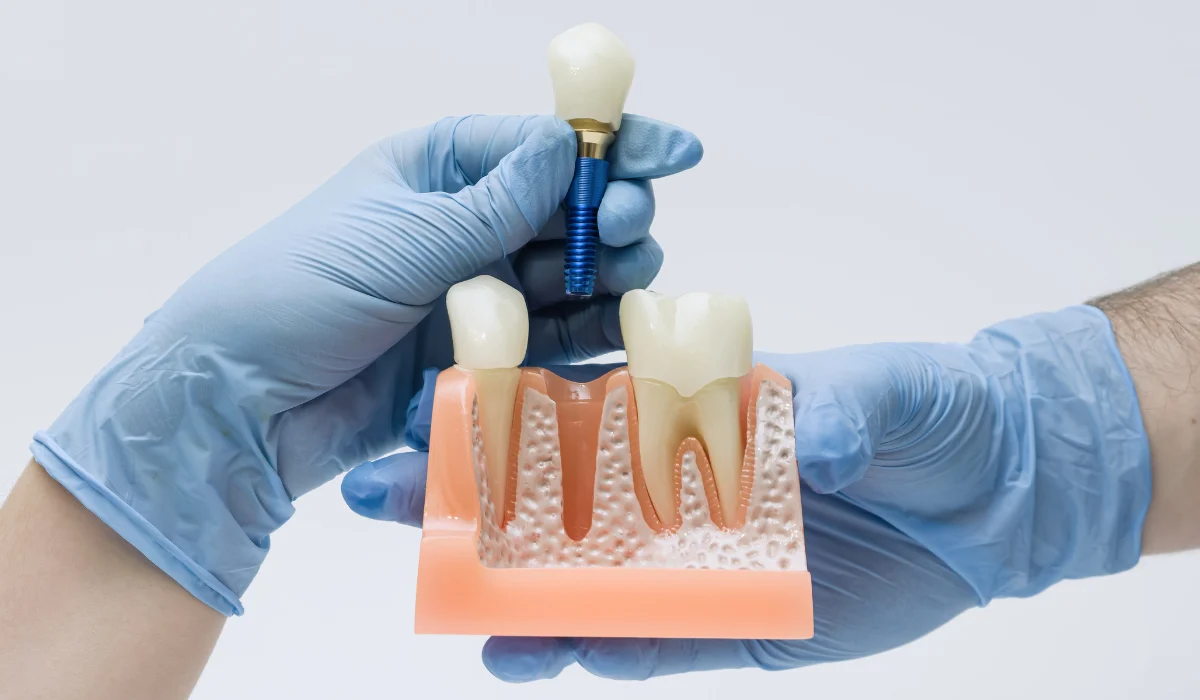
Table of Contents
A missing tooth changes your smile and that could be hard to ignore. While cosmetic effects appear first, leaving it untreated could cause the teeth around it to shift, the bite to change, and the jawbone beneath the gap to shrink.
Tooth loss is far more common than most people expect. Decay, gum disease, and injury account for most cases, and the average adult has lost around 12 permanent teeth by the age of 50.
At Gleam Dental® in Roncesvalles, Toronto, we plan treatments that restore both function and appearance. In this guide, we cover modern tooth replacement options, candidacy, and best approach for long-term oral care.
Missing Tooth May Lead to Other Issues
We recommend replacing a missing tooth immediately, because delays can result in bone tissue loss. Depending on that, your treatment options may be limited.
A missing tooth may cause:
- Jawbone shrinks beneath the empty socket
- Neighbouring teeth tilt into open space
- Opposing tooth drifts up or down
- Bite pressure spreads unevenly across remaining teeth
- Food traps in open space and causes decay
- Cheek or lip sags around missing tooth area
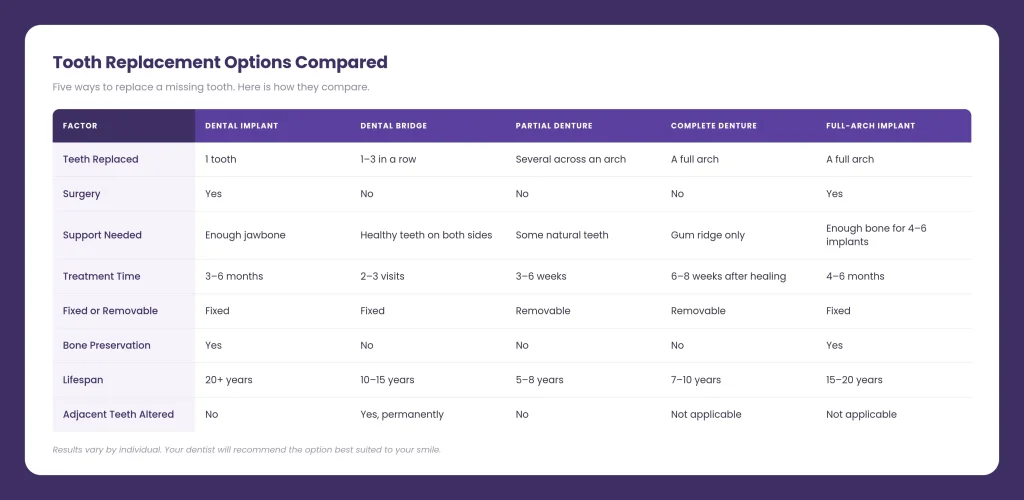
5 Tooth Replacement Options in Toronto
1. Dental Implants
Dental implant replaces the missing tooth with a metal post, which is placed into the jawbone. Over the next 3 to 6 months, the jawbone grows around the post and locks it in place through a process called osseointegration.
Once healing is complete, your dentist places a custom crown, made with porcelain or zirconia, on top. If you have lost a visible tooth, your dentist may place a temporary crown until healing is complete.
Is a Bone Graft Needed?
A bone graft is a procedure that rebuilds the jawbone using grafting material packed into the area. Bone starts shrinking within months of losing a tooth, and a thin jaw cannot hold an implant securely. The graft restores enough volume to anchor the post, then heals over several months before the implant goes in.
Implant Material: Titanium or Zirconia
Most implants use titanium, which is backed by decades of clinical evidence. Zirconia is a newer alternative made with ceramic, preferred as a metal-free option. Patients often choose zirconia for visible front teeth, where a dark titanium edge might show through thin gums. Zirconia costs $500 to $1,500 more per implant.
Who is a good candidate:
- Healthy gums with no active gum disease
- Enough jawbone to hold the implant, or willingness to undergo a graft
- Non-smokers, or patients ready to stop during healing
- Well-controlled general health, including diabetes
- Patients who want a single tooth replaced without altering the teeth beside it
Same-day Implants in Roncesvalles, Toronto
Gleam Dental offers same-day implants for eligible patients, where extraction and implant placement happen in a single visit. Immediate placement preserves the bone in the socket before it starts to shrink. Permanent crowns can be placed sooner since bone loss is minimal.
Our clinic is designed with patient comfort in mind, from ergonomic treatment chairs to VR glasses available during procedures. We accept most major insurance plans. Patients with Canadian Dental Care Plan coverage may be eligible for select services such as exams and diagnostic imaging.
Start with a consultation today.
2. Dental Bridges
A dental bridge fills the gap with an artificial tooth, called a pontic, held in place by crowns fitted over the teeth on either side. Most often, two supporting teeth are reshaped to naturally fit in the artificial tooth before they are bonded together. The whole process takes 2 to 3 visits and doesn’t involve surgery.
Bridges can replace up to 3 missing teeth in a row, as long as the supporting teeth are healthy and strong.
Changes to the Supporting Teeth
Your dentist files down enamel on both neighbouring teeth to make room for the crowns. That change is permanent, so those teeth will always need crowns going forward.
Making Changes to Your Oral Habits
The artificial tooth is attached to both supporting teeth, so floss cannot pass between them the usual way. During your final appointment, your dentist will talk you through a new flossing technique or teach you how to use an interdental brush.
Signs that a bridge is failing:
- Decay appears at the edge of a supporting tooth
- Gums swell or bleed around the crowns
- Supporting tooth is sensitive to heat or cold
- Bridge feels loose or shifts when you bite
- Persistent bad breath despite good oral hygiene
3. Partial Dentures
A partial denture replaces several missing teeth spread across an arch, using artificial teeth set into a gum-coloured base. Metal or flexible clasps hook onto your remaining natural teeth and hold the appliance in position.
This option works well when your jaw has lost significant bone and grafting cannot rebuild enough volume to anchor an implant. Bone loss builds up with age, so partials often suit older patients.
Your dentist takes impressions, fits a trial version, then adjusts the final appliance across 3 to 5 appointments over 3 to 6 weeks.
Partial Denture Options in Toronto
The choice of treatment depends on the number of missing teeth and their location.
- Cast metal partials use a rigid chrome cobalt frame, and they hold their shape longest
- Flexible partials use a soft nylon base, so they sit comfortably and show no metal clasps
- Implant-supported overdentures snap onto 2 to 4 implants, and you remove them for cleaning each night
Adjustment Period
Your first few weeks bring a learning curve, and most patients notice their speech and chewing improve as the mouth adapts. If you develop sore spots, your dentist files down the pressure points at a follow-up visit. Patients usually start with soft foods, then return to their normal diet over the following weeks.
Daily Care and Maintenance
Clasps trap plaque where they rest against your natural teeth and face a higher risk of decay. Some new habits to incorporate into your routine after dentures:
- Remove the denture and rinse it after every meal
- Brush the appliance daily with a soft brush and denture cleaner
- Clean carefully around the clasp line on your natural teeth
- Soak the denture overnight in water or a denture solution
- Handle it over a folded towel or a basin of water to prevent breakage
- Bring it to every checkup so your dentist can check the fit
4. Complete Dentures
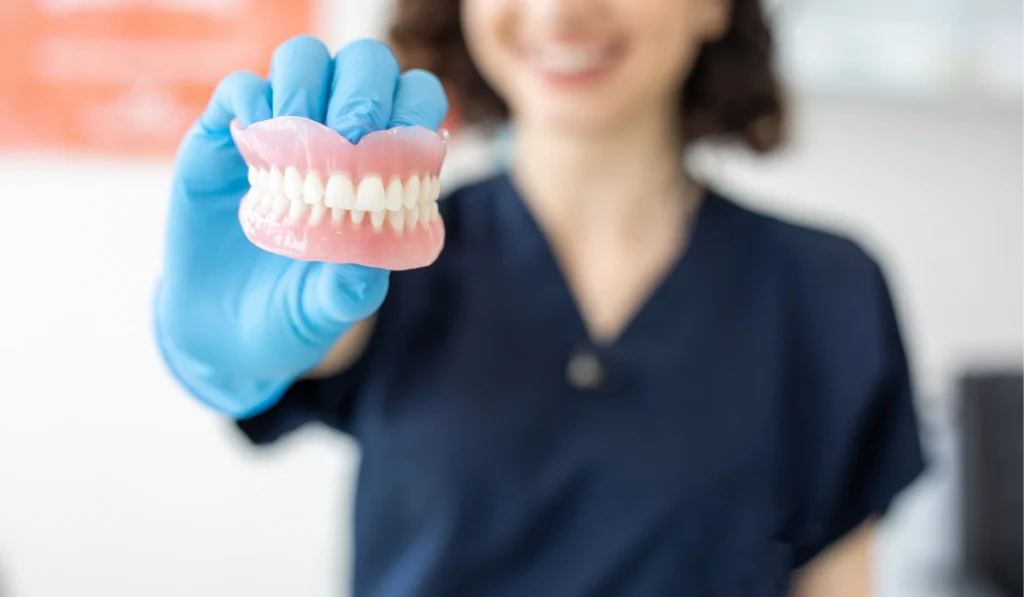
Complete dentures are used when you are missing all your teeth in the upper jaw, the lower jaw, or both. No clasps or anchors hold them in place. Natural suction keeps the upper denture against your palate, and the lower denture rests on the ridge of your jaw.
Our dentist takes impressions once the gums heal from any extractions, and the entire process takes 6 to 8 weeks.
Complete Denture Options in Toronto
- Conventional dentures go in after your gums fully heal, so the fit is accurate from the start
- Immediate dentures go in the same day your teeth come out, though the fit loosens as your gums heal and shrink
- Implant-supported dentures anchor a full arch to 2 to 4 implants, which solves the looseness patients report with lower dentures
Adjustment Period
Complete dentures take 4 to 6 weeks before eating and speaking feel natural again. You may notice increased saliva, a fuller feeling in your mouth, and difficulty pronouncing certain sounds. Sore spots are expected, and your dentist files down the pressure points at follow-up visits.
5. Full-arch Implant Denture
A full-arch implant denture replaces every tooth in a jaw with a fixed bridge anchored to 4 to 6 implants.
The most common version, All-on-4, angles the back implants to use available bone and avoid grafting in most cases. The process begins with implant placement, followed by a temporary bridge fitted the same day. Your dentist swaps it for the permanent bridge after 4 to 6 months of healing. These are permanent appliances and only your dentist removes the bridges for servicing.
Best suited for
- All or nearly all teeth missing in a jaw
- Full extraction from gum disease or decay
- Conventional dentures that slip while eating
What to Expect
The bridge typically lasts 15 to 20 years and slows the bone loss that continues under a conventional denture. Regular dentist visits keep the implants healthy. Your dentist unscrews the bridge, cleans the surfaces underneath, checks the gum tissue around each implant, and tightens the screws before refitting it.
Temporary and Transitional Options in Toronto
Permanent restorations take months to complete, and a visible gap during that wait is difficult for most patients.Temporary options fill the space while you heal and decide.
- Flippers are lightweight acrylic plates holding 1 to 3 artificial teeth, usually at the front. Your dentist makes one within days, and you wear it for weeks or months while the permanent restoration is planned.
- Maryland bridges replace a single front tooth using thin wings bonded behind the neighbouring teeth. Minimal enamel comes off, which makes this option reversible. Some patients experience bond failure, where the wings loosen and your dentist rebonds them at a follow-up visit.
- Temporary crowns go onto an implant the same day it is placed, so you leave without a visible gap. The crown is designed to sit slightly lower than your other teeth, so you cannot bite down on it while the bone heals around the implant.
Dental Implants and Tooth Replacement in Roncesvalles, Toronto
Gleam Dental offers dental implants, bridges, and dentures at our clinic at 430 Roncesvalles Avenue, Unit 109, Toronto, ON M6R 0A6. With in-house CBCT imaging and same-day consultations, every treatment begins with a thorough assessment.
Our clinic is designed with patient comfort in mind, from ergonomic treatment chairs to VR glasses available during procedures. We accept most major insurance plans. Patients with Canadian Dental Care Plan coverage may be eligible for select services such as exams and diagnostic imaging.
Book a no-pressure consultation to learn which tooth replacement option works best for you.