

Dental Veneers vs Composite Bonding: Which Is Right For Your Smile?
April 29, 2026

Table of Contents
Cosmetic dentistry rarely comes down to one perfect treatment for everyone. Many dental patients in Toronto compare dental veneers and composite bonding when thinking about changes to tooth shape, colour, and overall smile aesthetics.
At Gleam Dental®, treatment planning begins with advanced diagnostics and digital planning, using technologies such as the Planmeca Ultra Low Dose scanner and the iTero Lumina intraoral scanner.
In this guide, we explain how each treatment works, process involved, key differences, and guide you towards making the right choice for your smile.
Dental Veneers
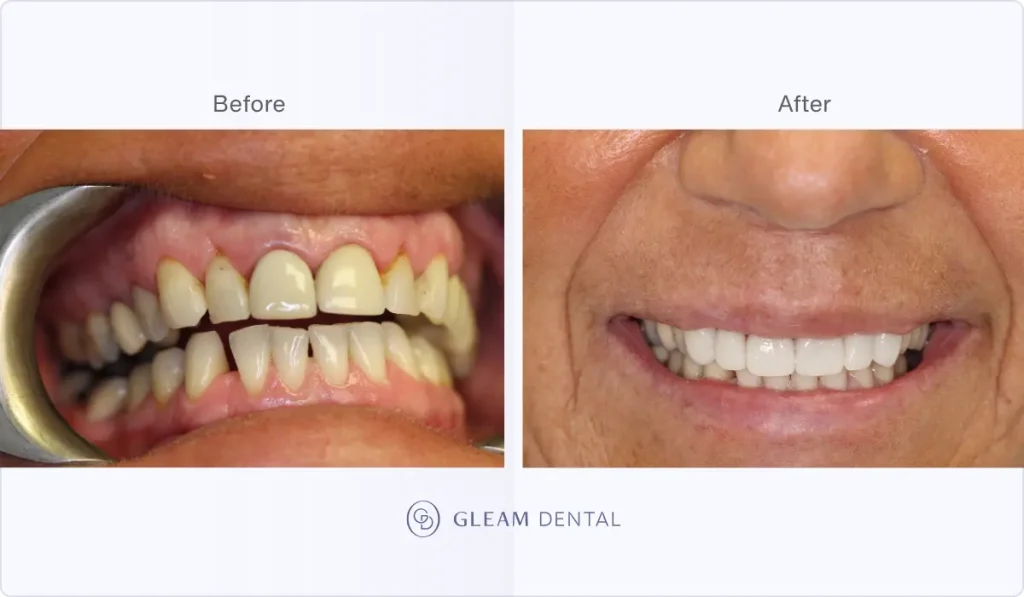
Thin shell restorations are placed over the front surface of your teeth. You generally have two material options.
- Porcelain veneers use lab fabricated shells bonded to the front of teeth
- Ceramic veneers use advanced materials that can offer excellent translucency and a more natural finish
To ensure the veneers sit naturally, dentists remove a thin layer of enamel first, often around 0.3 to 0.7 mm, though this can vary by case.
With the iTero Lumina scanner, our Toronto dentists can show you a detailed 3D view of your teeth and walk you through possible changes in colour, shape, and symmetry before treatment starts.
Who’s a good candidate for veneers?
Someone with:
- Teeth with deep staining that whitening cannot improve well
- Worn edges, small chips, or uneven tooth proportions
- Mild spacing concerns, especially across front teeth
- Looking for a longer lasting result
- Comfort with a treatment that usually involves enamel preparation
Cosmetic Bonding
Tooth-coloured resin that’s placed directly onto the tooth, cured, and polished to look natural. Bonding works best when the change is more modest and is often used for small chips, minor gaps, softened edges, or subtle reshaping.
Who’s a good candidate for composite bonding?
Someone with:
- Minor chips or worn edges that need subtle correction
- Small gaps between front teeth
- Slight unevenness in tooth shape
- Prefer a more conservative, cost-effective treatment
5 Main Differences between Veneers and Composite Bonding:
1. Procedure and Number of Appointments
Veneers
Follows a more structured design process where the dentist plans proportions, smile line, and bite, often using 3D digital scans. Teeth are then prepared, and veneers are fabricated before final placement. Treatment typically takes 2-3 appointments.
Bonding
Dentist places tooth coloured composite resin directly onto the enamel, then sculpts and layers it carefully to correct the issue. Once the shape looks right, the material is hardened with a curing light and polished so it blends naturally with the surrounding tooth. In many cases, treatment can be completed in one session.
2. Impact on Natural Tooth Structure
Veneers
Require more preparation because they are designed to sit over the front surface of the tooth and should look natural. To make room for them, the dentist usually removes a thin layer of enamel, around 0.3 mm to 0.7 mm. Since enamel does not grow back, veneers are a lifelong commitment.
Bonding
Builds onto the natural tooth without removing much structure in most cases, which makes it easier to adjust or remove later. The material bonds to enamel but does not integrate with it in the same way natural tooth structure does. With usual wear and tear, bonding can chip, stain, wear down, or lose its polish, especially with habits like nail biting or teeth grinding. If bonding breaks or falls off, you can usually get it repaired or reapplied in a simple visit.
3. Visual Finish and Detailing
Veneers
Offer more control over the final appearance because they are designed outside the mouth and placed as a finished surface. They can be adjusted to look softer, brighter, longer, or more balanced, with subtle details like edge shape, surface texture, and shade matching.
Bonding
Final finish depends heavily on how the dentist layers and sculpts the resin, which is why it helps to work with a dentist who focuses on cosmetic dentistry. Because composite does not reflect light the way natural enamel does, the material is usually built in thin layers and cured gradually to create better depth.
4. Longevity, Upkeep, and Costs
Veneers
Treatment costs more upfront, usually $900 to $1,200 per tooth in Toronto, but they tend to hold their appearance longer and resist staining better. Veneers are not reversible and will need to be replaced over time, often around the 10-15 year mark.
Bonding
Treatment has a lower upfront cost, usually $300 to $800 per tooth in Toronto, and that makes it appealing for smaller cosmetic improvements. It is also easier to repair if it chips or wears down, though it tends to show wear sooner over time. With proper care, composite bonding typically lasts around 3-7 years, before touch ups or replacements.
Cosmetic Dentists in Toronto
At Gleam Dental, luxury cosmetic dentistry begins in a setting that feels comfortable and thoughtfully designed. Our clinic is equipped with in house imaging and diagnostics, ergonomic chairs, and a compassionate, skilled team that helps make the experience feel more relaxed.
Our dentists, Dr Lidiya, Dr Maíra, and Dr Shali focus on creating results that feel balanced and natural, whether treatment involves veneers, composite bonding, or a combination of both.
Book a consultation with our Toronto dental clinic today.
Commonly asked questions about veneers and composite bonding
How soon can I see a dentist at Gleam Dental for the procedure?
Most patients can book a consultation within two weeks. If you would like to be seen sooner, please call our office directly, as earlier openings may become available.
Does bonding or veneers damage your teeth?
Neither treatment should damage healthy teeth when planned and performed properly. Veneers usually involve removing a thin layer of enamel, which makes them a more committed option. Bonding is generally more conservative and cost-effective.
Can I do bonding on some teeth and veneers on others?
Yes, this is an approach we routinely use as part of Smile Makeovers when different teeth need different levels of correction. Veneers may work better for front teeth that need more noticeable colour or shape changes, while bonding may be enough for a chipped tooth, a small gap, or a minor edge correction.
Which option looks more natural?
Both can look natural, but veneers usually look more like real enamel in the way they catch light. This gives them more depth and softness. Composite bonding can start to look flatter and lose some of its shine over time with normal wear, which can make the finish look less crisp.